
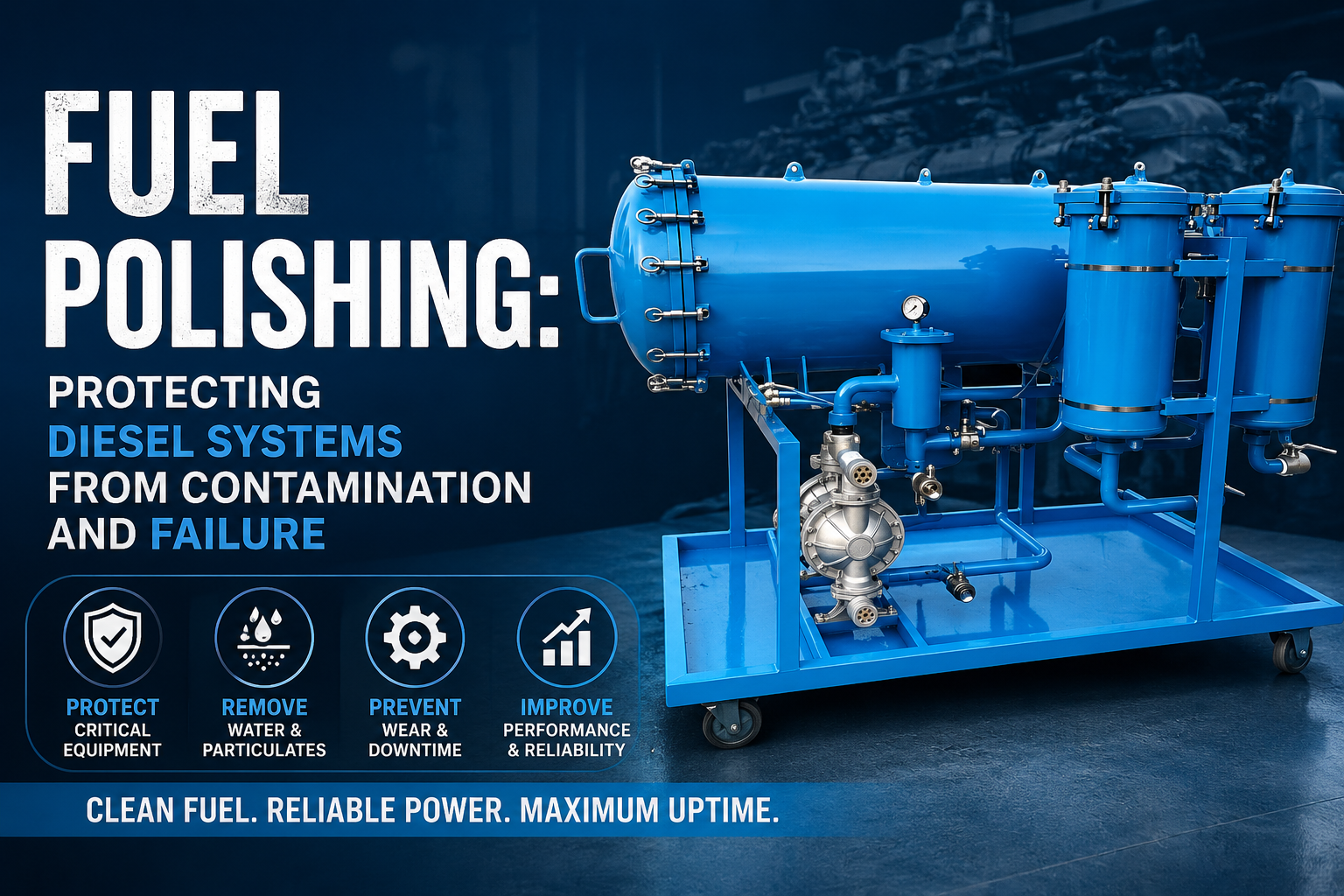
Why Clean Diesel Fuel Matters More Than Ever
Stored diesel fuel is often assumed to remain stable over long periods. In reality, diesel is chemically and biologically active, and begins to degrade as soon as it is stored. Over time, exposure to oxygen, moisture, and temperature variation leads to contamination that can significantly impact equipment reliability and performance.
For operations that depend on standby generators, marine propulsion systems, heavy machinery, or bulk fuel storage, fuel quality is a critical operational factor, not just a maintenance concern.
At Orion Automation Systems Limited, we provide professional fuel polishing and tank cleaning services designed to restore fuel quality, remove contamination, and reduce the risk of fuel-related equipment failure.
What Is Fuel Polishing?
Fuel polishing is a controlled fuel conditioning process used to clean stored diesel by removing accumulated contaminants and restoring fuel to a usable condition.
Typical contaminants addressed include:
- Free and emulsified water
- Sludge and settled sediment
- Rust and corrosion particulates from tank degradation
- Microbial contamination (commonly referred to as “diesel bug”)
- Oxidation by-products such as gums and varnishes
- Fine suspended particulates
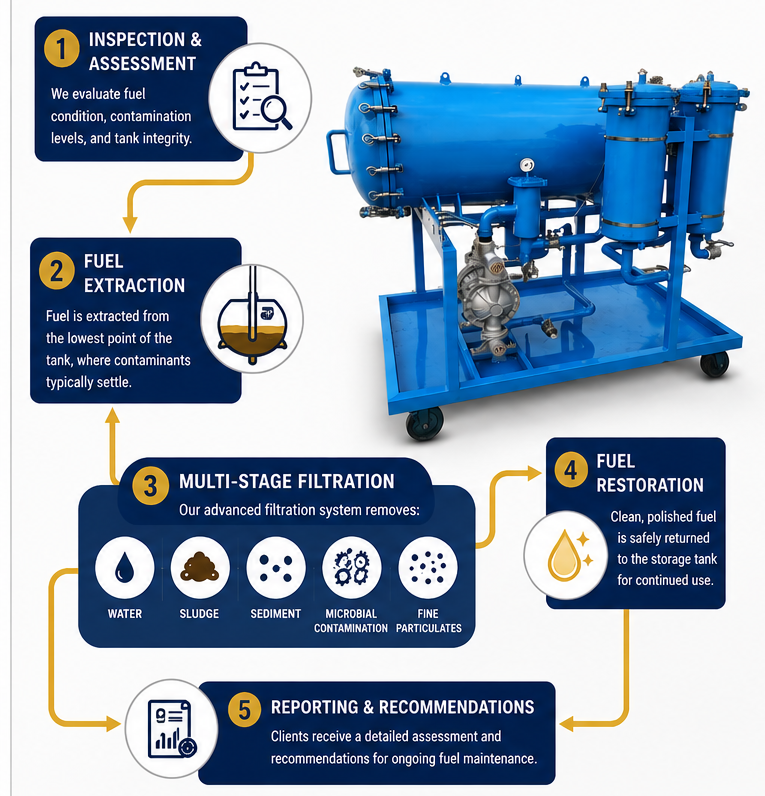
The process uses a closed-loop filtration system that draws fuel from the storage tank, passes it through a series of filtration and separation stages, and returns the treated fuel back into the same tank.
These systems typically incorporate multi-stage particulate filtration and water coalescing or separation technology to remove both solid and liquid contamination.
Unlike engine-mounted fuel filters which only protect equipment at the point of use, fuel polishing targets the entire storage environment where contamination originates and accumulates over time.
Why Diesel Fuel Becomes Contaminated
Diesel fuel does not remain chemically stable indefinitely. Its quality gradually deteriorates due to environmental exposure, storage conditions, and time, even when kept in sealed tanks. This degradation process is driven by physical separation, chemical reactions, and biological activity within the storage system.
Water Ingress and Condensation
Water contamination is one of the most common and damaging forms of diesel fuel degradation. It typically enters storage tanks through condensation, especially when daily temperature fluctuations cause moist air inside the tank to cool and condense on internal surfaces.
Once present, water settles at the bottom of the tank due to its higher density. This creates conditions that accelerate corrosion in metal tanks and provides a stable interface where microbial growth can develop.
Microbial Contamination (“Diesel Bug”)
Microbial contamination occurs when bacteria, yeast, and fungi develop at the boundary layer between water and diesel fuel. This interface provides both moisture and hydrocarbons which are ideal conditions for biological growth.
As these microorganisms multiply, they form biomass and acidic by-products that contribute to sludge formation, filter blockages, and accelerated corrosion of tank surfaces. In advanced cases, microbial activity can significantly restrict fuel flow and compromise system reliability.
Oxidation and Chemical Degradation
Diesel fuel undergoes oxidation when exposed to oxygen over time. This process leads to the formation of insoluble compounds such as gums, resins, and varnish-like residues.
These by-products reduce fuel stability and can contribute to injector fouling, reduced combustion efficiency, and the accumulation of fine particulate matter within the fuel system. The rate of oxidation increases with higher storage temperatures and longer storage durations.
Long-Term Storage Effects
Fuel stored in standby or infrequently used systems such as emergency generators, backup tanks, and remote installations tend to remain static for extended periods. Without regular turnover or conditioning, contaminants are allowed to settle and stratify within the tank.
Heavier particulates and water collect at the bottom, while degraded fuel components remain suspended or continue to break down. Over time, this increases the likelihood of fuel quality issues when the system is eventually placed into operation.
Common Indicators of Contaminated Fuel
Fuel contamination typically develops gradually, but operational symptoms become more apparent as degradation progresses. These warning signs often indicate that fuel quality has already been compromised:
- Frequent fuel filter blockages or premature clogging
- Engine misfires, rough running, or unexpected shutdowns
- Noticeable loss of power or inconsistent performance
- Darkened, hazy, or visibly cloudy fuel appearance
- Water detected during sampling or tank drainage
- Sludge, sediment, or deposits present at tank bottoms
- Increasing maintenance frequency and unscheduled servicing
If these conditions persist without corrective treatment, they can lead to more severe outcomes, including injector damage, fuel pump wear, internal corrosion of storage tanks, and in extreme cases, complete engine or generator failure.
How Our Fuel Polishing Process Works
Orion Automation Systems Limited uses a structured multi-stage approach to restore stored diesel fuel without requiring full tank removal or replacement.
Benefits of Fuel Polishing
Recommended Fuel Maintenance Intervals
Fuel polishing frequency depends on storage conditions, environmental exposure, and turnover rate. However, for standby or long-term storage systems, inspection and treatment cycles are commonly performed every 4–6 months. Regular fuel testing is recommended to determine contamination levels and optimize maintenance scheduling.
Protect Your Fuel Investment
Fuel contamination is often not visible until operational failure occurs. By the time symptoms appear at the engine level, degradation has typically already progressed within the storage system. Fuel polishing provides a proactive maintenance approach that restores fuel quality, protects equipment, and ensures operational readiness. Orion Automation Systems Limited delivers fuel polishing and tank cleaning services for industrial, commercial, and marine applications across Trinidad and Tobago and Guyana.
If your facility depends on stored diesel fuel, maintaining fuel cleanliness is essential to ensuring reliability when it matters most. Interested in our service? Feel free to Contact Us.
